
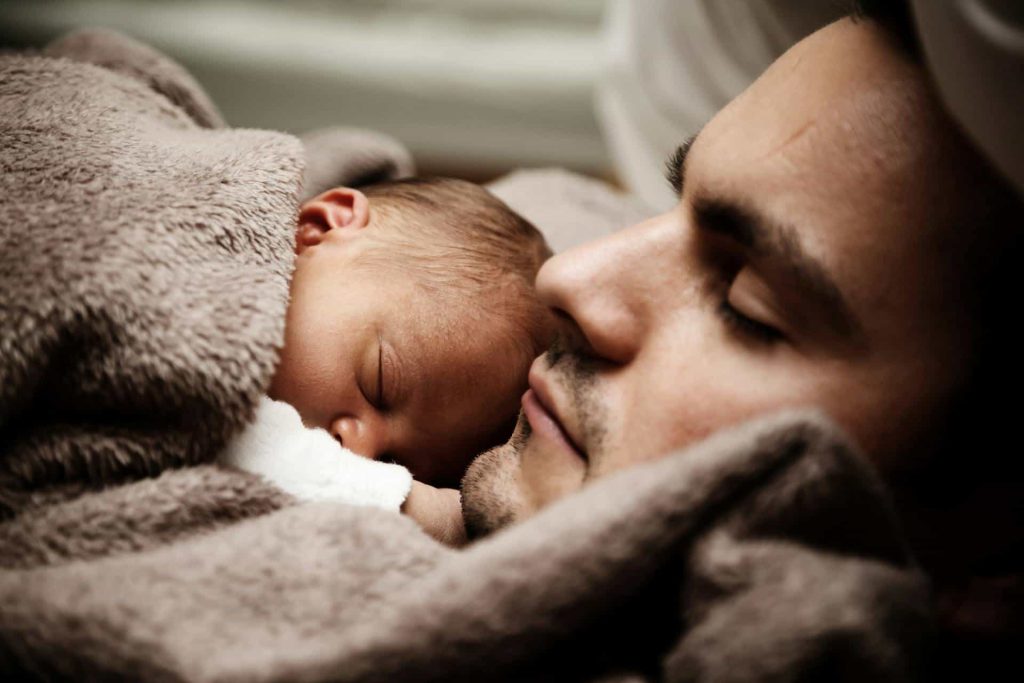
Few issues in the Christian walk have caused as much quiet division as the question of Sabbath rest meaning. For centuries, believers have wrestled with whether the fourth commandment requires us to keep a specific day, or whether the New Testament reveals something deeper. The truth is, there is nothing wrong with choosing to set aside a physical day for worship and rest. But the Bible shows us that Sabbath was always pointing to something greater.
But how, and what does that really mean? In Israel, Sabbath rest meant stopping everything — no work, no activity. Is that what we are supposed to do today? And why is it that the apostles repeat all of the Ten Commandments except the fourth about the Sabbath? Was it deliberately omitted, or are they pointing us to Sabbath in a different way?
Sabbath Rest Was Instituted During Creation
To understand the Sabbath, we need to realise something many people miss. Sabbath was instituted during creation, long before the law of Moses. Note that each of the six days of creation has a clear beginning and ending: “So the evening and the morning were the first day… the second day… the sixth day.” But that is not the case with the seventh day.
Genesis 2 says, “And on the seventh day God ended His work which He had done, and He rested on the seventh day from all His work which He had done. Then God blessed the seventh day and sanctified it, because in it He rested from all His work which God had created and made.” (Genesis 2:2–3, NKJV).
The seventh day was different from all other days in at least three ways. First, it was blessed. None of the others were. Second, what was created was totally different: rest. It was something spiritual, new, and unique. The first six days brought forth physical creation, but the seventh introduced a divine rhythm. Third, the seventh day of rest had no recorded ending, symbolising an ongoing reality.
You may ask, “So what? What does that have to do with anything?” The answer is, “Everything”.
This is Why You Were Born

Have you asked yourself why the all-powerful God who does not need anything created man? What is His core purpose with your life? What is the primary message of the Bible?
The reason God created man and the earth was to expand His family by adding more sons (male and female) who reflect His character and share in His purpose. Apostle Paul summarises it this way in Romans 8: 14, “For as many as are led by the Spirit of God, these are sons of God.” That purpose is realised in Revelation 21: 7, “He who overcomes shall inherit all things, and I will be his God and he shall be My son.”
He would do that with a different class of living beings who were not only spiritual but natural too. That would happen in a physical space called earth. Genesis 1: 26 says man (that’s both male and female) was created in the image and likeness of God. In the previous verses we are told that animals were each created after its own “kind”. After whose kind would man be created? After the God kind. His “likeness” and “image” refer to composition and structure, not behavioural attributes.
Scientifically speaking, we would say man was of the God species. He was created as the little version of God but with limited capabilities that would develop subject to walking the journey of his identity. Think of it as a lion cub that is born a lion. It was made after the likeness and image of the lion. It is of the lion kind. It is of the lion species.
Just like a lion cub born as a lion lacks the capabilities of the adult lion, so was man made lower than his Parents. To mature as this powerful king of the jungle, the cub would have to spend time with adult lions and learn the ways of the lion. The cub is of the lion identity but must mature in that identity. A lion that grows up with dogs could never fully mature in its identity because it would not know the ways of the lion. Identity is about structural make up, putting on the mindset and beliefs of that which you are, and then living that way.
In the same way, man was already of the structural composition of God. He now needed to take two other critical steps – believe who he was as a God “cub” and act that way. How would he know who he was? He needed to spend time with his Parent, God, to know who he was and could do. These would be the tools that he would use to carry out his assignment.
What was his assignment? It was to expand Eden to the rest of the planet. We know the rest of the planet was not like Eden because after he chose to rebel against his Parents, he was kicked out to that part of the earth that was not Eden. Eden was only a small part of the earth where the Kingdom of God existed. It was heaven on earth.
Sabbath Rest Meaning And Work
After man chose to rebel against God, his thoughts and actions were continually against the way of life of his Parents. Spending time together became even more important. It was this one practice that distinguished Israel from all other people and set them apart as God’s chosen people. God chose them to restore His original plan, which involved the coming of the “Seed of the woman” mentioned in Genesis 3:15 — a unique child born of a virgin who would defeat the devil. This Seed is Jesus Christ.
Man’s assignment given in Genesis 1:28 (to be fruitful, multiply, fill the earth, subdue it and have dominion) was to build and create during this open-ended day of rest. The Creator had rested and then asked His “cubs” to continue His creation work forward beyond the boundaries of Eden. The way to accomplish this was to remain tethered to Him. Only in constant intimacy with God would humanity know what to do and how to do it.
Rest Is Not Doing Nothing

It is important to stress this point. When we hear the word rest, we often think of doing nothing. But in the Bible, rest is not idleness. It is the very opposite — functioning in your God-given design.
It means God continuing His creative work through His children, who were to grow and mature into their full identity. Rest is intimacy first — hearing and learning from Him — and then going forth to carry out the work. On your own, it is striving. With Him, it is rest. Not because it is easy, but because it is aligned with your identity and calling, producing fruit that reflects Him. That fruit is not self-glory but love, expressed as solutions that bring life to others.
Jesus said: “Come to Me, all you who labor and are heavy laden, and I will give you rest. Take My yoke upon you and learn from Me, for I am gentle and lowly in heart, and you will find rest for your souls.” (Matthew 11:28–29, NKJV).
Notice that He does not invite us into passivity but into a yoke. A yoke represents work, but work done in partnership. Rest, in God’s terms, is not escaping responsibility but doing life in alignment with Him. It is intimacy with God that frees us from the exhaustion of self-effort.
Think of a motivated craftsman shaping wood or an excited gardener tending a vineyard. It is hard work but they would not have it any other way. It is a meaningful activity that is aligned with their identity, their natural gifting. Their hearts are alive because they are doing what they were born to do. This is the essence of biblical rest: not inactivity, but fruitfulness born from communion with the LORD. Sabbath was never simply about stopping — it was about stopping in order to be re-centered in God’s presence and then carrying His life outward into the world.
The Sabbath in Israel’s Story
Under the Mosaic covenant, the Sabbath was given as a sacred marker of Israel’s relationship with God. It was not just about ceasing from work but about being set apart as a people who trusted their Provider. On the seventh day, they demonstrated dependence, declaring that life was sustained not by endless toil but by communion with the One who created them.
The Sabbath command carried weight because it forced Israel to trust God’s provision and timing. While surrounding nations laboured without pause, Israel was told to rest — showing that their true security came from Him. This was not a badge of superiority but a living reminder that they belonged to God. It was about rhythm, not rivalry.
That is why Paul could later write: “Therefore, the law was our tutor to bring us to Christ, that we might be justified by faith.” (Galatians 3:24, NKJV). The Sabbath, like the rest of the law, was never the ultimate destination. It pointed forward to Christ, who embodies what the day could only foreshadow. But there’s more.
Sabbath Rest Warning in Hebrews 4
Hebrews 4 ties all of this together. First, Sabbath rest was about a day. Later it became both a day and a place. Israel was promised rest in the land of Canaan, but they failed to enter because of unbelief. “For indeed the gospel was preached to us as well as to them; but the word which they heard did not profit them, not being mixed with faith in those who heard it.” (Hebrews 4:2, NKJV).
But rest in Canaan did not mean idleness. They were not meant to sit still in a land flowing with milk and honey, doing nothing. They were to build that land into a tabernacle where God could be with them all the time, for they were a nation that reflected His justice, mercy, and truth. Their rest was meant to be fruitful, active, and God-centered. But unbelief kept them from entering God’s rest in a land that was meant to be their rest.
Do you see how rest is not about a day or a place? Sabbath rest is something you enter. Can you enter a day? No. They entered Canaan but not God’s rest in it. Rest is a state of being, a reality bigger than a calendar date.
That is why the writer continues: “For if Joshua had given them rest, then He would not afterward have spoken of another day. There remains therefore a rest for the people of God.” (Hebrews 4:8–9, NKJV). And the key verse: “For he who has entered His rest has himself also ceased from his works as God did from His.” (Hebrews 4:10, NKJV).
The warning is sharp: “Let us, therefore, be diligent to enter that rest, lest anyone fall according to the same example of disobedience.” (Hebrews 4:11, NKJV). Rest is not about legal observance but about faith. It is about entering into God’s Kingdom life by trusting His Word and His Son.
Sabbath Rest Meaning and Jesus Christ
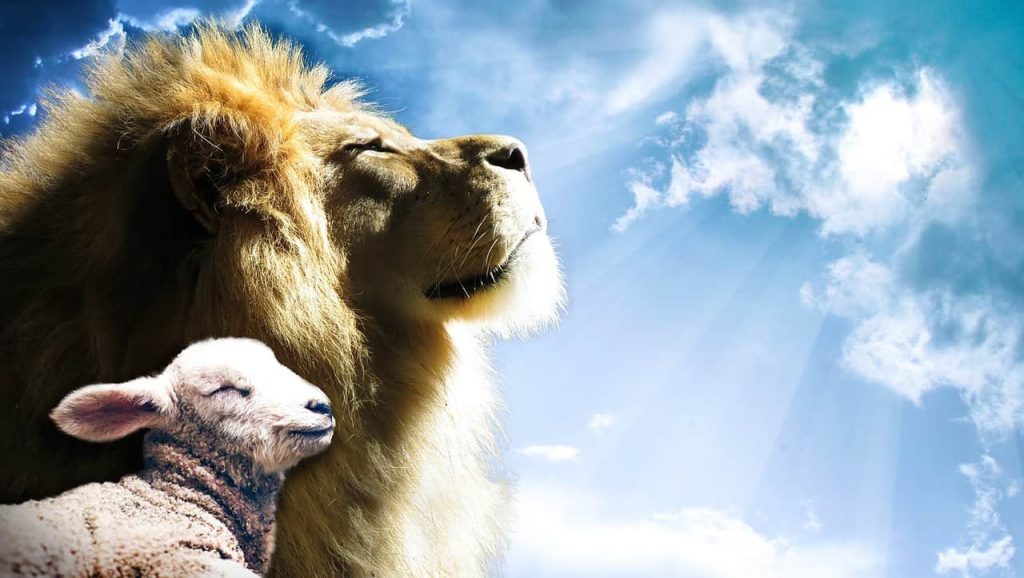
The New Testament insists that Sabbath is fulfilled in Jesus Himself. Apostle Paul writes: “So, let no one judge you in food or in drink, or regarding a festival or a new moon or sabbaths, which are a shadow of things to come, but the substance is of Christ.” (Colossians 2:16–17, NKJV).
Jesus is not just the giver of rest — He is the rest. He is LORD of the Sabbath: “And He said to them, ‘The Sabbath was made for man, and not man for the Sabbath. Therefore, the Son of Man is also LORD of the Sabbath.’” (Mark 2:27–28, NKJV). He is the finished work.
When we speak of the “finished work” of Christ, we mean His death and resurrection, which accomplished, once and for all, what the law could only foreshadow. On the cross, He declared, “It is finished!” (John 19:30, NKJV). The penalty for sin was paid, the power of sin was broken, and reconciliation with God was secured. This is the foundation of our rest. No longer do we strive to earn God’s approval or labour under guilt. In Christ, the work is already complete. Rest begins where striving ends.
Just as God’s rest on the seventh day of creation in Genesis 1 had no recorded ending, so Christ’s rest for us is eternal. In Him we are restored to the intimacy and identity that Adam was meant to enjoy. Sabbath is no longer about ticking off a commandment — it is about abiding in a Person.
Sabbath Rest Meaning Today
So, what does this mean for us today? It means that Sabbath rest is not about guarding a calendar date but about entering a relationship. It means trusting in Christ’s finished work instead of your own effort to achieve righteousness. It means learning to live in alignment with your design, doing what brings Kingdom fruit and joy because it flows from who you are in Him.
This Sabbath rest is not doing nothing on a specific day. It is Spirit-led activity that renews instead of depletes, that flows from faith instead of fear. It is daily communion with God — listening, aligning, and drawing strength from His presence. It is walking out your calling in ways that bring both peace and productivity, because they are born from His life in you.
There is nothing wrong if you choose to block off a day for spending time with the LORD. This was the intention all along. However, that intimacy needs to continue throughout the week – all the time.
You would have heard that the Old Testament was the shadow and the New Testament the reality. The shadow was about physical things. The reality would be about the spiritual truth that those things of old pointed to.
Weekly rhythms of worship and rest still carry value. They refresh our bodies, refocus our attention, and remind us of our dependence on God. But they are not the measure of our righteousness. The measure is Christ alone. Sabbath rest today is about living as children of God, knowing that our worth is secure, our assignment is clear, and our future is anchored in His Kingdom.
The Eternal Sabbath Rest
Revelation 21 and 22 draw the circle closed, tying the end of the story back to the beginning in Genesis 1 and 2. In the beginning, God created Eden as the meeting point of heaven and earth. Humanity’s task was to expand that reality outward, beyond Eden. However, because of sin, that plan was interrupted. But in the end, God restores His design in full.
“Now I saw a new heaven and a new earth, for the first heaven and the first earth had passed away. Also there was no more sea. Then I, John, saw the holy city, New Jerusalem, coming down out of heaven from God, prepared as a bride adorned for her husband. And I heard a loud voice from heaven saying, ‘Behold, the tabernacle of God is with men, and He will dwell with them, and they shall be His people. God Himself will be with them and be their God.’” (Revelation 21:1–3, NKJV).
Here is the ultimate Sabbath rest: heaven and earth reunited, God dwelling with His people, and His children reigning with Him. There is no temple in that city, for the LORD God Almighty and the Lamb are its temple (Revelation 21:22). There is no curse, and His servants serve Him, seeing His face and reigning forever and ever (Revelation 22:3–5).
This is the eternal fulfillment of Sabbath. What began as a blessed day in Genesis becomes an everlasting reality in Revelation. The rhythm of rest and communion stretches from the first garden to the eternal city. Sabbath rest is the Kingdom of God on earth, restored and unbroken.
The apostles’ relative silence on the Sabbath as a day to ring-fence is not an oversight — it’s a deliberate theological pivot. In the wake of Christ’s resurrection, the early church shifted its focus from ritual observance to relational transformation. The Sabbath, once a symbol of covenantal rest, found its fulfillment in the person of Jesus, who invited all to find rest in Him.
Rather than prescribing a fixed day, the apostles emphasized a lifestyle of spiritual rest, grace, and freedom from legalism. This shift was especially vital as the gospel expanded beyond Jewish communities into Gentile cultures. Apostle Paul taught that faith in Christ replaces the need for legalistic observance, declaring that believers are justified not by works of the law but by faith alone (Galatians 2:16). In this light, the Sabbath becomes a shadow of the deeper rest found in Christ, not a ritual to be rigidly preserved (Colossians 2:16–17).
In essence, the apostles weren’t dismissing the Sabbath — they were elevating its meaning, pointing to something deeper. It was rest not bound by time, but anchored in the person of Christ — a rest that liberates the soul from striving and invites it into communion. This rest transcends calendars and rituals, echoing the eternal rhythm of grace, and ultimately points to the restoration of all things in Him.
Summary And Conclusion

The question of Sabbath rest meaning has divided Christians for centuries. But when we look closely at the Bible, the answer is clear: Sabbath is not abolished, but fulfilled. It was always pointing to God’s original purpose in Genesis, His covenant with Israel, His warning in Hebrews, and His completion in Jesus Christ.
Sabbath rest meaning is not found in defending a calendar date but in entering into the life of Christ. Is Jesus our Sabbath rest? Yes. That is Sabbath in the New Testament. It is living in alignment with your God-given design, daily receiving His strength, and looking forward to the fullness of His Kingdom. Revelation 21 and 22 remind us of the final picture: a new heaven and a new earth where God dwells with His people, where rest is not a day but an eternal reality. That is the Sabbath rest we are invited into.
When all is said and done, this is what I believe matters most: Actively seek intimacy with the LORD daily, be tuned to His voice at all times, and intentionally go out to become love. It’s not just about doing — it’s about becoming: Becoming love. Becoming a vessel. Becoming aligned with His will. It is the journey of transformation, not performance. This is the core.
The “how” will always look different, and that’s okay. What unites us is far greater — and far more important — than what makes us different.
The assignment of the Great Commission is vast and urgent. That’s where our energy belongs — not in criticizing one another or debating who’s more right. Let’s stay focused on the mission, not the noise. The enemy uses these five powerful strategies to do his best to distract us from this critical work. Let’s not allow that.
“There remains therefore a rest for the people of God.” (Hebrews 4:9, NKJV).
The invitation is open: stop striving, believe His Word, and enter His rest.
Ohhh, been torn up by this for years. Thanks so much for providing the clarity. Sabbath rest is not about mechanics. It’s about the depth of the relationship with the LORD. Amen to that!